
Start a Lodi Residents Search with the Right Custodian
No single Lodi roll names every person at every address. Start by sorting the clue. A current parcel question goes to the San Joaquin County Assessor, GIS, and Recorder. A court question belongs with San Joaquin Superior Court. City permits, council filings, and campaign records sit with the Lodi City Clerk. Or they sit with the department that created them. An old household may surface in a city directory, census schedule, newspaper, or museum collection. Each record answers a narrower question than the phrase "residents directory" implies. The city itself keeps only its own records.
Ownership is not occupancy. The Assessor ties an assessee and mailing address to an APN. A deed names the parties to a title transaction. A directory might list one adult. A voter file is restricted. Renters and unlisted households can be absent. Protected participants and anyone who moved after a record was made can be absent too. A careful Lodi residents search keeps those limits beside every result.
The starter sequence below keeps a name, parcel, and time period connected. It moves the search from current records toward older evidence.
- Write down the full name, known date, spouse, business, cross street, or address. Keep birth and married surnames, initials, suffixes, and diacritics.
- For an address, use the Lodi GIS Property Viewer to capture the situs address, parcel outline, and APN. For a name, begin with the county Assessor or a record set that uses names.
- Use the Recorder index, court party search, state business or license search, and other fitting custodians. Match dates and roles instead of accepting a name alone.
- Move to the Lodi Public Library and San Joaquin County Historical Museum for directory, newspaper, census, map, and obituary clues when the question reaches backward.
- Request the identifiable record from its keeper under the California Public Records Act when an online index is incomplete. Ask for inspection, electronic copies, or paper copies as the office allows.
Where Lodi Resident Records Are Kept
Stockton holds the San Joaquin County seat. Most county records tied to Lodi therefore sit outside the city. The Recorder-County Clerk keeps title instruments, public marriages, and fictitious business names. Related filings live there too. The Assessor holds the current property roll and parcel maps. The Registrar of Voters gates voter-file access. Lodi City Clerk Olivia Nashed remains custodian of city agendas and minutes. She also keeps contracts, campaign material, and municipal records. These offices form the working spine of a Lodi residents directory. Yet none is a complete household list.
San Joaquin County Recorder-County Clerk
44 N. San Joaquin St., Suite 260
Stockton, CA 95202
209-468-3939
Recorder information and access
San Joaquin County Assessor
44 N. San Joaquin St., Suite 230
Stockton, CA 95202
209-468-2630
Assessor property information
San Joaquin Registrar of Voters
44 N. San Joaquin St., Suite 350
Stockton, CA 95202
209-468-8683
California voter status check
Lodi's City Clerk sits at 221 W. Pine St., with mail to P.O. Box 3006, Lodi. The published phone is 209-333-6702. Counter hours run Monday through Thursday, 7:30 to 5:30, with every other Friday from 8 to 5. Confirm before visiting. County offices post their own counter schedules. The Recorder and County Clerk generally open on weekdays, and the Assessor lists 8:30 to 4:30.
Lodi’s 1851 Recorder Trail
The county Recorder advertises research across 168 recorded-document types reaching back to 1851. That depth helps with a name, an estate, or a property trail. Still, it is a party and instrument index. A deed shows grantor, grantee, vesting, and a legal description. It does not prove who slept at the address. A street address may be missing. The index is not a census. So the APN, legal description, prior party, date, and document number carry the weight.
The dynamic San Joaquin County Recorder self-service portal is the first online stop. Older books may sit only at the counter. Take the instrument number or book and page to Stockton for those. The trail also moves by mail or phone. County property information shows why the parcel side of a Lodi residents directory must stay distinct from the deed side.
| Recorder field | How it narrows a Lodi search |
|---|---|
| Party / name | Search a surname, variant, entity, or grantor/grantee role. |
| Document number | Returns one known recorded identifier. |
| Document type | Narrows deeds, deeds of trust, liens, releases, maps, or decrees. |
| Recording date | Constrains a common name to a date or range. |
| Book and page | Connects older references to a paper or scanned instrument. |
Check the county Recorder's scope and contact page first. The county's property-information entry point frames parcel and map access. Owner-name research runs through the office itself. The split is a useful signal. A free web map can orient a search without becoming a people directory. San Joaquin County property information supplies the parcel view shown here.
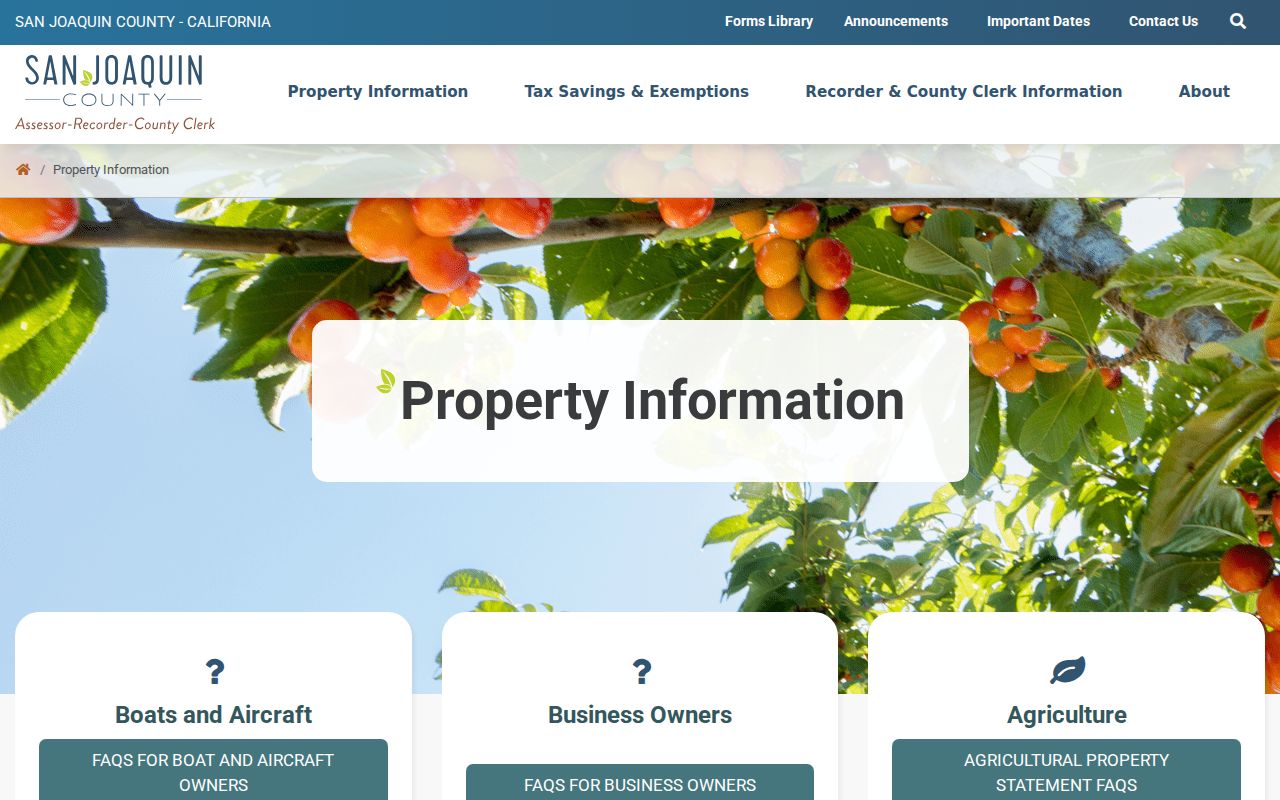
The parcel image anchors APN and map work. It is not proof of occupancy or a complete list of Lodi residents.
What the California Voter Roll Reveals
California's Check Your Registration Status service is a self-record tool, not a public address search for another person. It checks one record: your own. An authenticated voter can review registration status, party preference, voting location, and ballot-related status. Access to full voter information is statutory, under Elections Code sections 2188 and 2194 and 2 CCR sections 19001 through 19013.
An approved recipient may receive a restricted file for election, scholarly, journalistic, political, governmental, or qualifying record-review work. The San Joaquin County application asks for a wet signature, identification, a detailed purpose, and a security plan. That bar is deliberate. It can cover up to 10 named voters. The county file is listed at $68. Review takes 7 to 14 business days. Phone, email, date of birth, party, precinct, and participation fields are controlled, while driver-license number, Social Security number, and signature are never released.
The voter roll can support an authorized record review. It is not a casual Lodi neighbor directory. That distinction protects both the record and the person behind it. The California voter status form is the source for this self-check view.
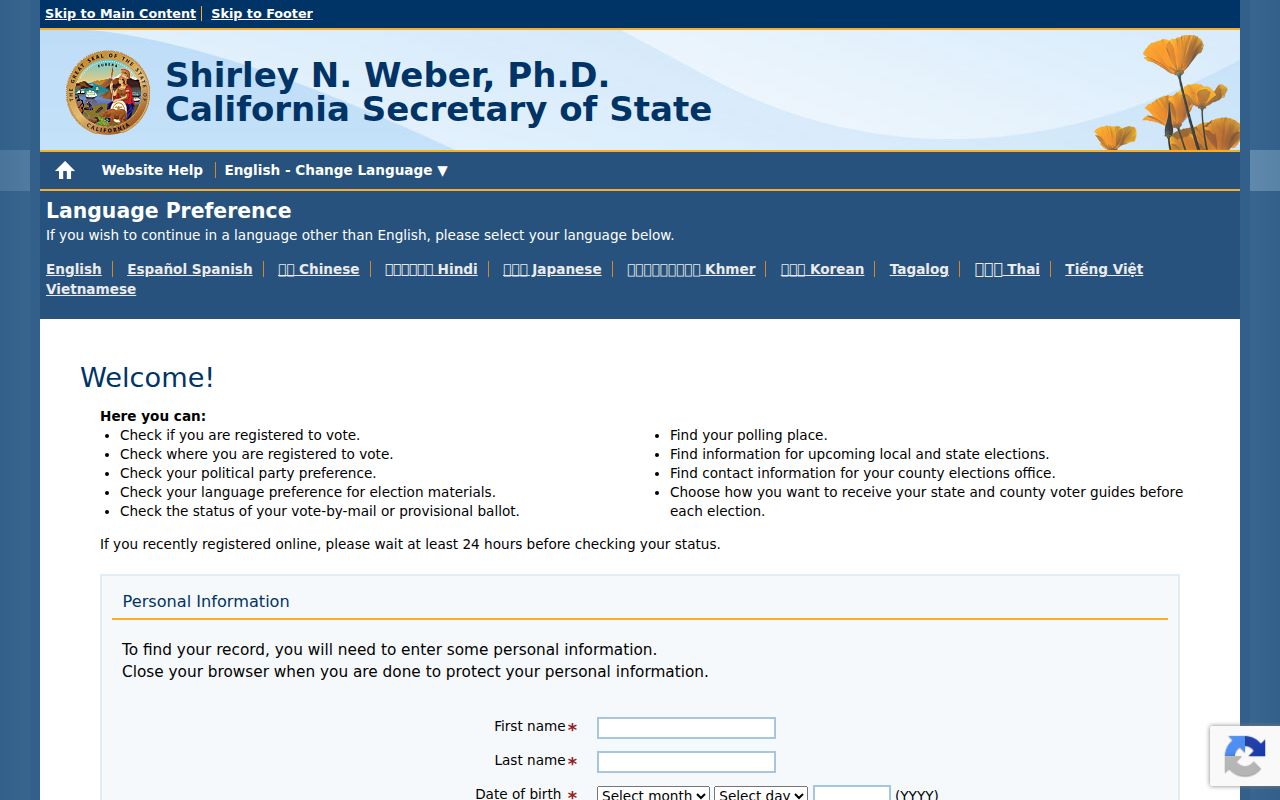
The state form opens only one narrow public route: confirming your own registration rather than browsing a street.
Today’s Lodi Resident Directory Sources
A current Lodi residents directory reads best as a coverage chart rather than a single master list. The Assessor answers any parcel and ownership question. The Recorder shows who signed a recorded instrument. A court index names parties and case events, the City Clerk portal exposes public municipal business, and the library and museum supply older names and addresses. The sources overlap, but their record roles do not.
| Source | What It Can Show | Keeper | Access |
|---|---|---|---|
| Assessor roll and parcel map | Assessee, APN, situs, mailing lead, values | San Joaquin County Assessor | Web map and office research |
| Recorder index | Parties to deeds, liens, releases, maps | Recorder-County Clerk | Self-service portal and counter |
| Superior Court docket | Case number, parties, type, events, hearings | San Joaquin Superior Court | FullCourt, kiosk, or request |
| City Clerk records | Officials, applicants, correspondents, contracts | City of Lodi | Records Portal and CPRA |
| Voter status service | One voter’s own registration details | California Secretary of State | Self-service only |
| Library and museum collections | Directories, newspapers, yearbooks, past addresses | Lodi Library and SJC Historical Museum | Catalog, onsite, or archive request |
Each row gives a different kind of lead. Keep the record role intact. For one-person work, compare at least two independent custodians before trusting any name. An assessee may be a trust or entity. A court party may be an attorney, plaintiff, or beneficiary, and a directory entry may represent one listed adult rather than everyone in the home. The Lodi resident lookup workflow keeps those distinctions visible while a name moves across sources.
- Roll
- An official list maintained for a defined purpose, such as assessment or voter registration.
- Index
- A finding aid for a record; an index line is not always the full document or a certified copy.
- Parcel
- A mapped unit tied to an APN and legal description, not a household count.
- Criss-cross directory
- A printed reverse directory that can move from an address or street to a listed occupant.
Search Lodi Records, Then Use CPRA
Lodi’s public-records page offers several routes. A request can go through the city Records Portal, an online California Public Records Act form, email, or an arranged inspection. Name the department and record type. Add a date range, address, or APN. Naming a known meeting, permit, or project helps too, because the CPRA covers only existing identifiable records and cannot force the City to build a new residents directory or answer a research question.
Paper copies run $0.10 per page plus postage. Electronic media can cost actual media and postage, though email or an onsite inspection may avoid paper fees. Police and fire reports go to their own departments. Community Development holds the permit and planning trail. The City Clerk keeps agendas, minutes, contracts, campaign statements, Form 700 filings, and public-hearing notices. The Lodi City Clerk page identifies the municipal custodian and its records duties.
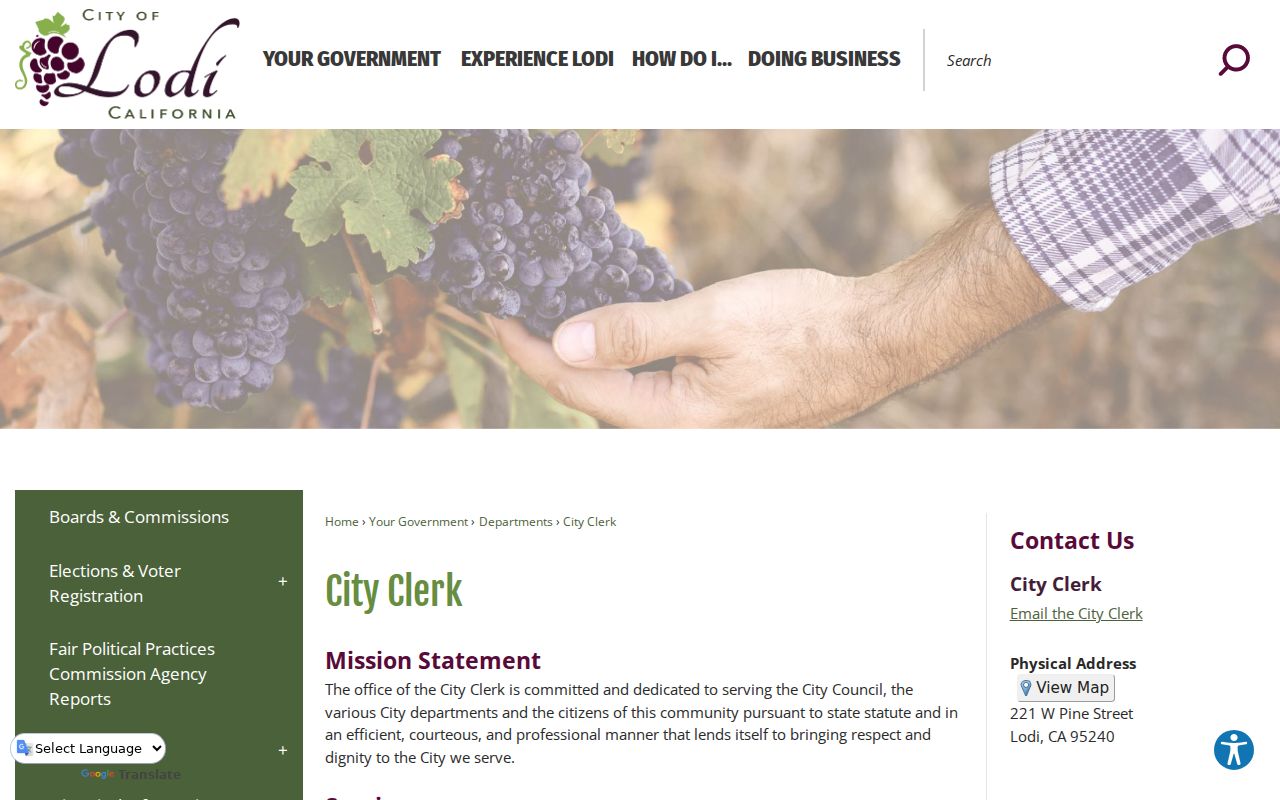
City records end at the clerk’s desk. Lodi’s public-records instructions lay out the request routes the city supports, while parcel, deed, and court questions move to county custodians.
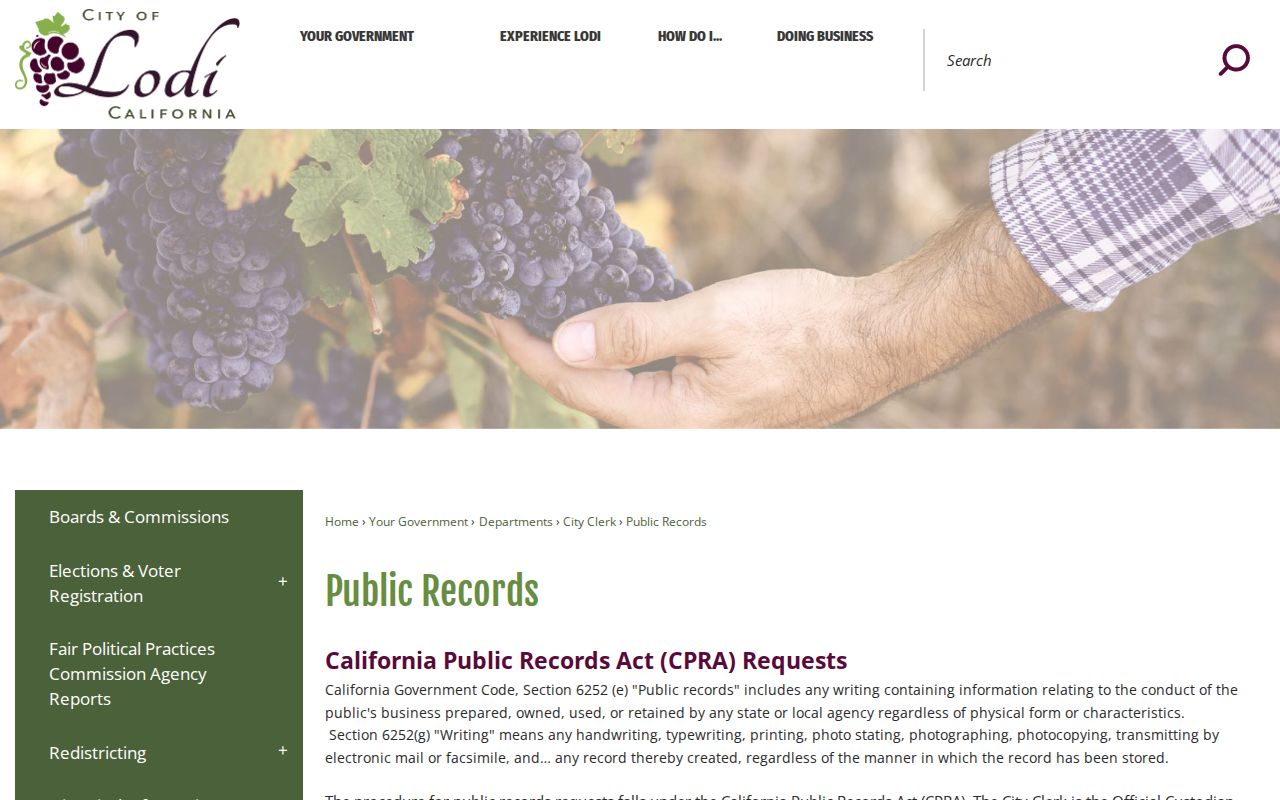
Name the office that created each record. A city records request and a county property search often need to run side by side before a Lodi address question is settled.
Confirm One Lodi Name Across Roles
A name earns trust only when its role stays clear. Search a land-owning name at the Assessor first. Then search it again at the Recorder. Compare the legal description or APN across both results. Business names work differently. Run the name through the Secretary of State’s bizfile Online Business Search. Check county fictitious business name filings when a local trade name matters. A Department of Consumer Affairs result shows a license status. Its address of record may be professional rather than residential.
The Superior Court’s FullCourt portal can add a case number and party role. It also shows a filing date and hearing history. It is not the official record, though. A same-name case still needs a second clue. The county unclaimed-property search can tie a name to an old city or ZIP. But it does not prove current residence. Keep a short evidence note for each result. Merging records because two spellings look close is how errors creep in.
Official rolls and commercial reference products answer different questions. A commercial product may blend public and licensed data. Yet it can sit stale, mismerge two people, or resist correction. A county or state custodian owns the source record. The custodian can explain its field, date, and correction route.
| Route | Strength | Limit |
|---|---|---|
| Official county, city, court, or state record | Named custodian, defined purpose, source field | Access rules, redactions, date limits, and separate offices |
| Commercial reference product | May gather several public clues in one view | Unclear freshness, mixed identities, fees, and separate opt-out |
Free California Name Trails for Lodi Leads
State databases are handy for a narrow clue. They are no substitute for a full Lodi residents directory, though. The California Business Search takes an entity number or a name. You can search in Keyword, Exact, or Begins With mode. Results may include entity status, jurisdiction, addresses, agents, and imaged Statements of Information. The state business search is one of the free name tools represented here. Spellings matter in this wine and agriculture economy. A registered agent, a licensee, a vineyard owner, and a resident can all be different people. They may share one name.
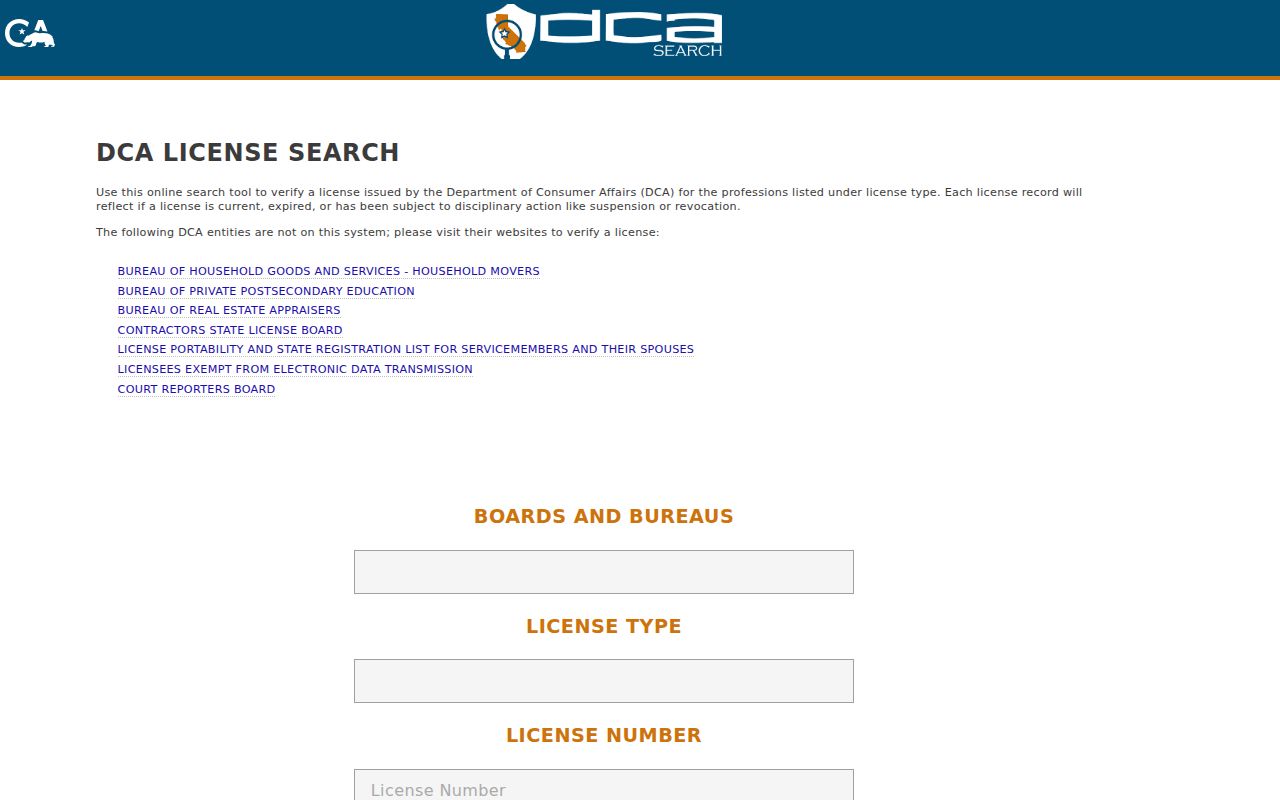
A business abstract helps with an affiliation check. It will not establish a home address. The California Department of Consumer Affairs runs a license search that accepts a board or license type, a name, a license number, a city, or a county. Results usually show status, issue or expiration details, and public discipline links. When the umbrella search falls short, go straight to the named board. DCA’s license search supplies the source for this second state-level view.
Keep in mind what a license record is. It describes a professional status, not a complete resident profile. For an old name and address pairing, the Controller’s unclaimed-property search is worth a try. It requires a last or business name. A property ID works too. A first name, city, and ZIP can refine the result. A match is only a historical lead. Confirm it with a deed, an obituary, a court filing, or a direct custodian record. California’s free claim search shows the name and place filters used for that limited clue.
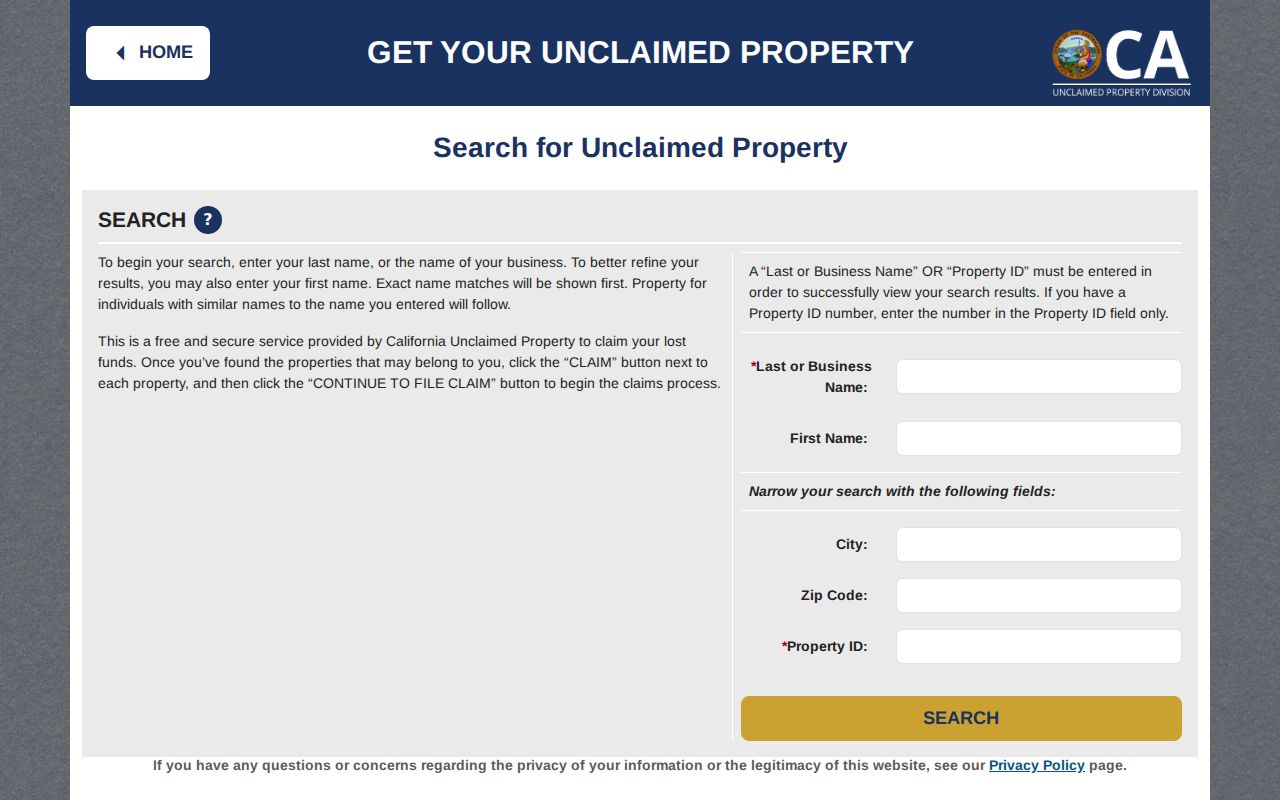
Skip the paid locators until you have tried the state's own free search and claim route for Lodi leads.
Lodi Court Records Have a 2015 Divide
Lodi court records split at one date. The San Joaquin Superior Court's FullCourt Enterprise Public Access Portal can show a case number, party names and roles, case type, filing date, current status, hearings, and register-of-actions events. That only works when the record is remotely exposed. Search by case number first when you have one. Otherwise pair a last name with a first name, a case type, and a narrow filing-date range. Same-name matches shrink fast. The divide is real. Criminal registers of action from before October 19, 2015, plus material withheld under Rule of Court 2.507, require onsite viewing or a records request. Stockton has research terminals and a view-room path. The Lodi Branch at 315 W. Elm St. accepts a CR-109 request for copies held at the branch. Fees run $15 for a search when staff spend more than ten minutes, $0.50 per page per side for ordinary copies, and separate certification charges. The public court search shows why an online result is only one layer.
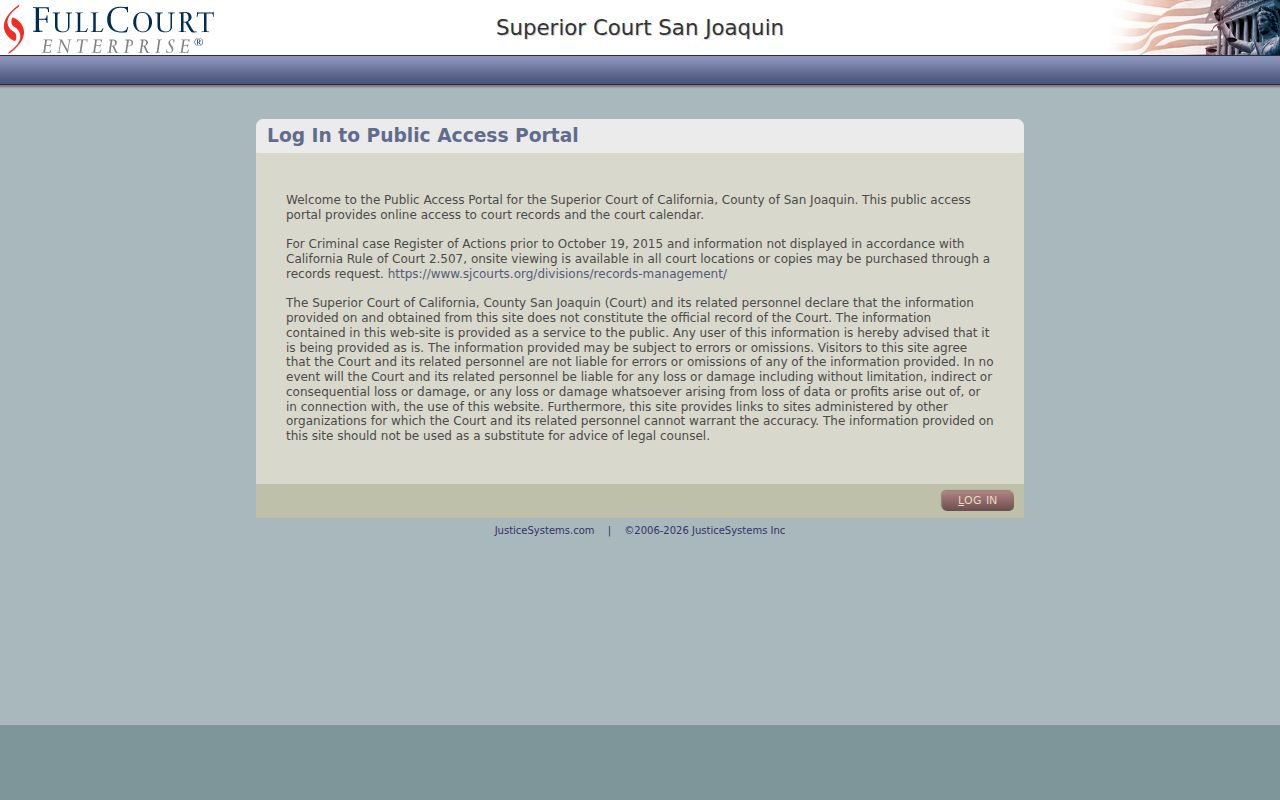
Use Records Management or CR-109 when the portal stops.
Vital Copies and New California Rules
Vital records sit with several keepers. The San Joaquin County Recorder holds every year of county birth and death records and public marriages. The County Clerk keeps confidential marriages. The local registrar keeps current and prior-year events. Divorce splits too. Superior Court certifies divorce decrees. CDPH instead issues a certificate of record, not the full decree.
California separates informational copies from authorized certified copies. An informational copy is stamped as not valid to establish identity. An authorized birth, death, or marriage copy demands a qualifying relationship or role plus a sworn statement. Mailed sworn statements must be notarized. Four forms gather event and applicant details: VS 111 for birth, VS 112 for death, VS 113A for marriage, and VS 113B for divorce.
For 2026, CDPH posts fees of $31 for birth, $26 for death, $19 for marriage, and $18 for a dissolution certificate. A no-record result keeps the search fee. Starting July 1, 2026, direct CDPH forms replace third-party online-vendor submission for certified-copy applications. Check the live fee page before mailing a request.
California Confidentiality Can Hide a Lead
Safe at Home shields qualifying survivors. The program provides a substitute mailing address, confidential voter registration, and certain name-change protections. It also covers certain DMV protections. Government agencies and California courts must accept the designated address where the program applies. Government Code sections 6205 through 6211 do not erase an old public record. A protected address is not a search failure. Treat it as neither a failed lookup nor a reason to dig into other sources.
Other blind spots wait in the Lodi record landscape. DMV information sits behind the Driver's Privacy Protection Act. Utility and customer files, library-borrowing data, confidential marriages, sealed adoption files, juvenile and sealed court records, and household members who are not title parties all stay out of view. A commercial compiler may copy a public record. But an opt-out never changes the source record. California privacy law adds know, delete, correct, and opt-out routes against covered businesses. These fall under Civil Code section 1798.100 and later provisions.
Lawful personal use. Public records can support family history, civic review, estate research, reconnecting, or a safety concern. Do not use a Lodi resident search to stalk, harass, intimidate, or harm anyone. Verify a sensitive result with the custodian and respect every confidentiality rule.
Megan’s Law Is a Narrow Safety Search
The California Megan's Law Website runs on its own authority, Penal Code section 290.46. Updates happen daily. Name search and map or radius modes work within the limits the law sets. Read its warnings and permitted-use rules. A registry result is not a general Lodi residents directory. An empty result proves little beyond that site's scope.
San Joaquin County Sheriff custody information and the CDCR Incarcerated Person Locator cover different populations. Federal custody tools differ as well. A jail booking is not a conviction. State prison custody is not county jail custody. Attach the source, date, and status to any record you save.
The official registry search is the state system.
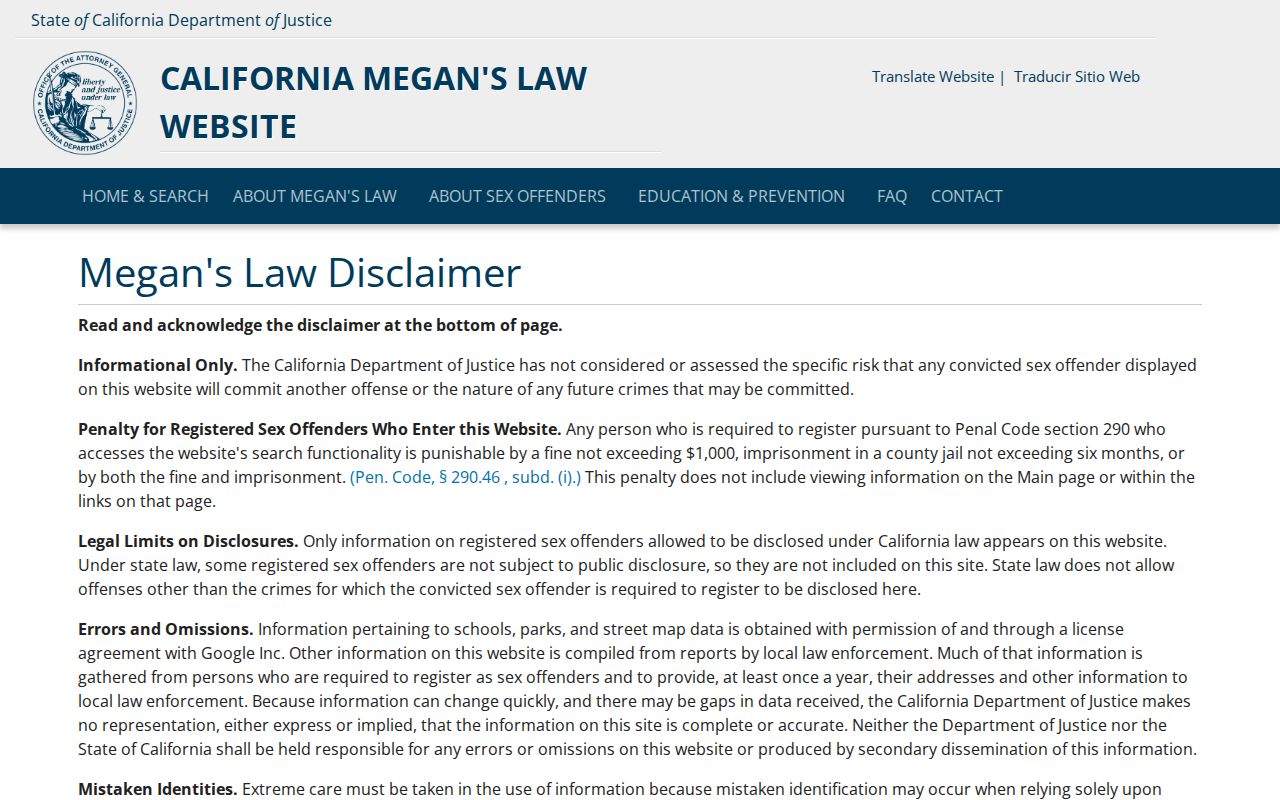
The result type is defined by statute. It should not be stretched into any broader claim about a person or a neighborhood.
From Mokelumne to Lodi in the Index
Lodi's paper trail answers to more than one name. The railroad settlement was Mokelumne in 1869. It became Lodi in 1874 and incorporated in 1906. Early deeds, newspapers, directories, maps, and family notes may carry the older name or a rural route. Search both place names, then confirm the county, township, cross streets, parcel, and time period.
The 1887 Sacramento Street fire destroyed the commercial core. County deeds in Stockton survived it. The fire can still explain a rebuilt storefront, a changed business address, or a gap between a directory line and a later map. Museum Sanborn sheets, aerials, photographs, newspapers, and assessment books help date the change. No official source publishes a single citywide street-renumbering year. Legal descriptions and cross streets are safer anchors than assumed number continuity.
Historical Lodi Resident Directories
The San Joaquin County Historical Museum at Micke Grove sits inside Lodi. It keeps directory material for the city and county from 1852 through 1980. Its shelves also hold county archives, Great Registers, maps, aerials, photographs, and Sanborn sheets. They also hold assessment and plat books. The span is not a promise of an annual Lodi volume for every year. Ask the staff for a shelf or box list. The Lodi Public Library catalog rewards searches for Lodi directory, Stockton and Lodi, San Joaquin County directory, Polk. Try telephone directory and criss-cross too.
The 1950 Stockton & Lodi City Directory shows how these books work. Read the Lodi portion, not a same-name Stockton entry. An alphabetical section moves from a name to an address. A street or criss-cross section moves the other way, from an address to a listed occupant. Note the spouse or widow mark, occupation, residence, business address, abbreviation key, title, year, and page. A listing usually covers one adult or householder, not every resident at the address. Full collection methods and reading notes live with the Lodi city directory collections.
For a historical Lodi residents directory search, start with the nearest directory year. Pair the year with a federal census schedule through 1950. The 1890 population schedules were largely destroyed. That loss explains the gap. Great Registers, assessment rolls, newspapers, and directories carry so much weight because of it. The library and the museum complement each other well. One points to published local sources. The other holds county and municipal series. Those never became a public web index.