
Lodi ZIP Code Directory at a Glance
Three postal codes shape most Lodi searches, but they do not have the same function. ZIP 95240 is the main central, east, and south Lodi clue and appears around the downtown civic core. ZIP 95242 is associated with west and northwest Lodi and western growth. ZIP 95241 appears in civic and post-office mailing uses, including the City Clerk's P.O. Box 3006, so it should not be drawn as a residential neighborhood. The table gives a useful starting frame, while the exact address remains the deciding fact.
| ZIP Code | Areas Covered | Post Office | Notes |
|---|---|---|---|
| 95240 | Downtown, central, east, and south Lodi; many civic addresses | Lodi delivery | Postal clue only; verify city jurisdiction |
| 95242 | West and northwest Lodi; western growth areas | Lodi delivery | Boundary is not the incorporated city line |
| 95241 | Lodi post-office boxes and civic mailing uses | PO-box-oriented Lodi use | Includes City Clerk P.O. Box 3006; not a resident district |
USPS city names describe delivery, not municipal limits. A Lodi ZIP can reach unincorporated land in north San Joaquin County. City services, parcel location, and planning authority need a municipal or county check. No stable official narrative table sets out neighborhood boundaries for these codes, so a ZIP map should never replace an address-level check.
The USPS ZIP Code Lookup provides the address-level check for a Lodi postal clue.
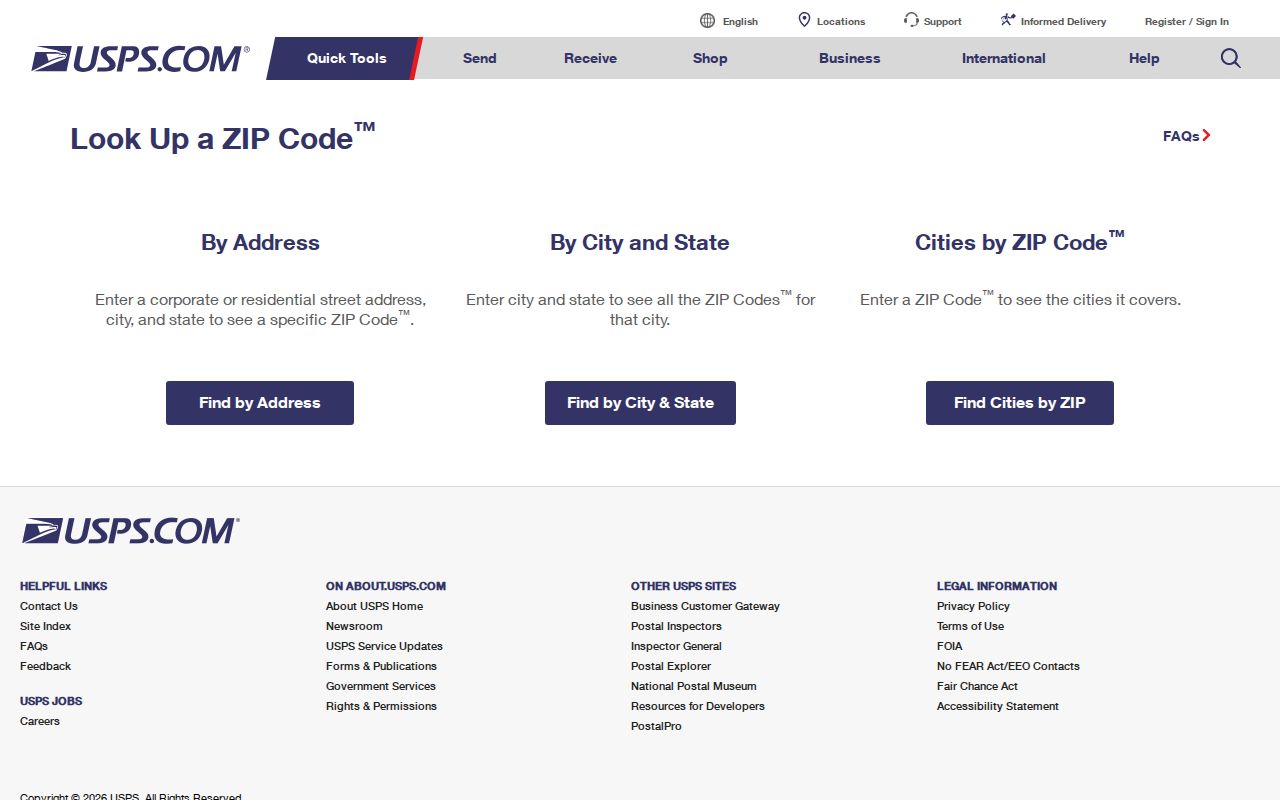
The lookup view is useful because it tests a full street address, not an assumed neighborhood polygon. Save the returned city and ZIP beside the parcel and jurisdiction notes.
Note: A ZIP narrows mail delivery; it does not by itself identify a resident, owner, or city-limit parcel.
95240 Marks Lodi's Civic Core
95240 is the clearest postal starting point for downtown and the older civic core, with central, east, and south Lodi addresses also using it. City Hall and library references commonly carry the code. That makes 95240 helpful for locating public offices, library material, and an initial postal match when a record gives only city and ZIP.
The clue stays broad. It does not tell whether a parcel sits inside the incorporated boundary, whether a name is an owner or occupant, or whether an old directory used the same postal label. For a current property question, move from the full address to the Lodi GIS Property Viewer, then preserve the APN and the jurisdiction layer. For a historical question, retain the ZIP as printed and compare it with the directory year, cross-street, and map.
95242 Tracks Western Lodi Growth
95242 is the useful postal refinement for west and northwest Lodi and areas associated with western expansion. A newer subdivision or business corridor may first appear in a parcel map, aerial, subdivision document, or building file before it is easy to locate in a printed directory. A ZIP clue can help group the search, but an APN and legal description carry the more durable property identity.
Western growth also makes the city-limit warning important. Postal Lodi is larger than incorporated Lodi. A 95242 address may be close to the city, served by the same delivery name, or tied to county jurisdiction. Check the parcel in GIS and confirm which office holds permits, planning material, or property data before sending a records request.
Why Lodi's 95241 Is a Mailing Clue
95241 has a different role in Lodi records. The City Clerk's mailing address uses P.O. Box 3006, Lodi 95241. That makes the code important when reading a civic notice, sending a public-records request, or matching a government mailing line. It does not describe a stable residential area and should not be used to draw a block or count households.
Post-office boxes can sit inside a city service pattern while representing a person, office, or organization that receives mail there. Preserve the box line as written. If a name appears with 95241 in a state filing or other record, treat it as a mailing association until a separate parcel, court, vital, or historical source supplies the needed context.
Note: Lodi's 95241 civic mailing use is a built-in warning against treating every ZIP as a residential polygon.
Finding Lodi Residents by ZIP Code
A ZIP-keyed resident search is an indirect workflow. Official systems do not all accept the same field. Unclaimed Property accepts an optional City and ZIP after a name or property ID. County GIS and parcel records test location and jurisdiction. The voter file can include address and ZIP fields only after a qualifying request. Recorder and court systems are keyed to parties, documents, and cases, not to a ZIP browse.
- Verify the complete street address and postal assignment with USPS before treating the ZIP as a search key.
- For a name clue, use Last or Business Name or Property ID in California Unclaimed Property, then add Lodi and 95240 or 95242 when useful.
- Use the Lodi GIS Property Viewer and county parcel map to test the situs, APN, and jurisdiction. The viewer's address workflow is described by the Lodi zoning and property viewer page.
- For a lawful voter-file purpose, submit the required application, wet signature, identification, purpose, and security plan before sorting any delivered data by ZIP.
- Once a postal clue narrows the area, use the Lodi by-street address workflow for parcel-level work instead of treating the ZIP as the final result.
A result from one ZIP should be labeled as a postal association. Add an APN, deed party, case role, directory address, or other independent fact before calling it a resident match. A free Unclaimed Property result is especially useful for a historic city pairing, but it is not present-residence proof.
Which Lodi Records Accept a ZIP Clue
The best ZIP search fields belong to tools built for mail or voter-file delivery. The California Controller asks for a name or property ID and lets City and ZIP refine the result. USPS tests a full address. A county voter-file request can produce controlled address data after approval. By contrast, the Recorder's index is party and document based, and FullCourt is case and party based. Neither is a ZIP directory.
| Official source | ZIP-capable fields | Interpretation |
|---|---|---|
| California Unclaimed Property | Last or Business Name or Property ID; optional First Name, City, ZIP | Historic name and place clue, not current residency |
| USPS ZIP lookup | Full address, or city and state lookup mode | Postal assignment, not a resident roster |
| San Joaquin voter-file request | Applicant, delivery, purpose, file choice, security plan, and ID fields | Address and ZIP data only for an approved recipient and use |
| GIS and Assessor | Address, parcel, APN, map, and planning layers | Parcel and jurisdiction evidence, not ZIP browsing |
The California voter-information access rules explain why a ZIP field cannot be used as a casual neighborhood directory.
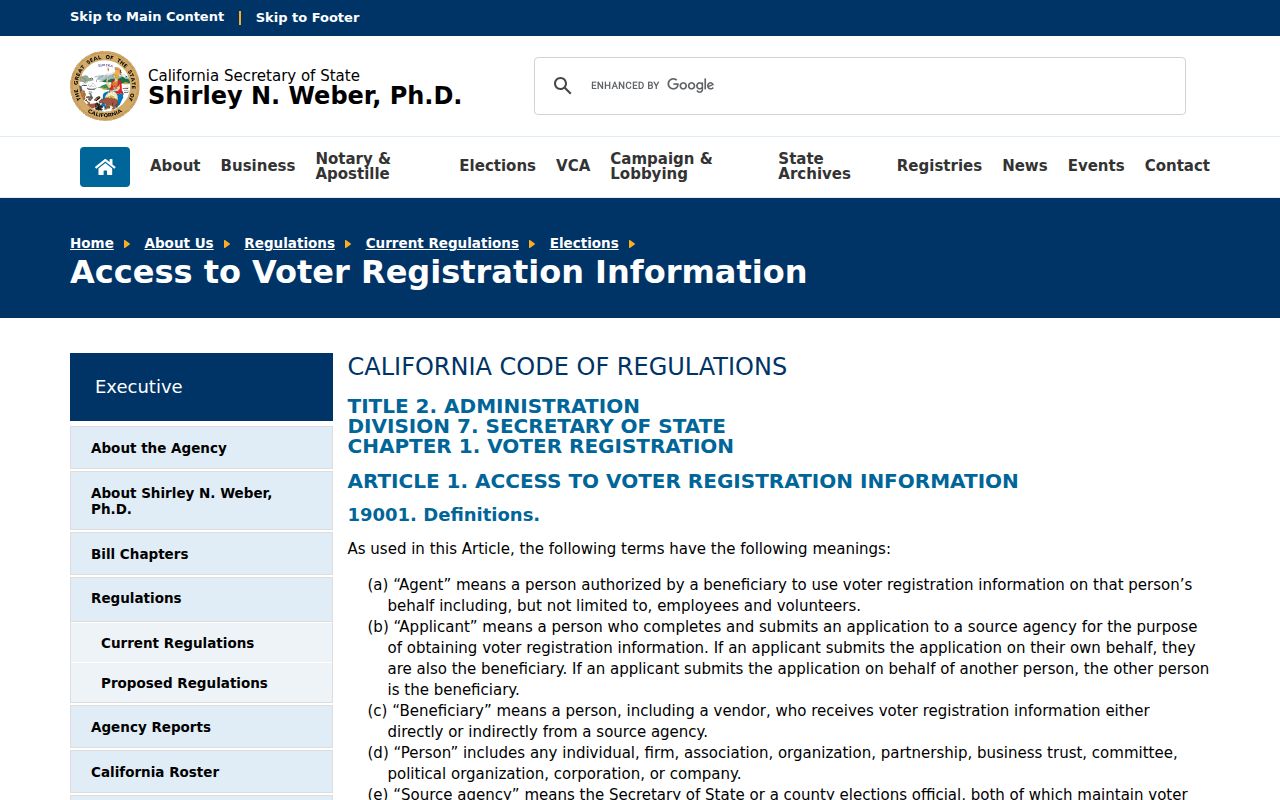
The rules preserve the difference between an approved file product and a public search box. A ZIP filter becomes meaningful only inside the allowed purpose and delivery controls.
Note: A ZIP narrows a mail route, an APN narrows a parcel, and a case number narrows a court file.
ZIP Code Boundaries and Lodi City Limits
Postal geography and municipal geography answer different questions. USPS may label an address Lodi even when the parcel is outside the incorporated city. A city service or planning question may belong to Lodi, San Joaquin County, or another nearby jurisdiction despite a familiar postal name. Woodbridge and rural north-county references can also appear in family, school, winery, and property stories without proving that the person lived inside Lodi.
No official source in the local research set provides a stable narrative boundary for 95240 or 95242. Avoid third-party ZIP polygons as legal lines. Verify the delivery address with USPS, then use the county District Viewer, parcel layers, APN, and municipal boundary information to decide which records office has authority.
Boundary check. A Lodi postal city and ZIP do not prove incorporation, parcel ownership, or the proper records custodian. Keep postal, parcel, and jurisdiction fields separate.
Privacy Limits on Lodi ZIP Searches
California's public voter-status service lets a voter check the voter's own registration. It does not support a public search for everyone in a Lodi ZIP. Full voter information is restricted to election, scholarly, journalistic, political, governmental, and qualifying record-review purposes. A San Joaquin County request needs a wet signature and current photo ID, rejects email or fax delivery of the application, and requires a purpose and security plan. Approved files can carry residence and mailing ZIP fields, but driver's license numbers, Social Security numbers, and signatures are not released.
The county application can cover up to 10 specific voters. Review is stated as 7 to 14 business days. The countywide file is $68, with approved electronic delivery through encrypted WinZip email or FTP. Participation history can show election, date, and method, never ballot choice. A ZIP sort inside an approved file is a controlled records use, not a shortcut around the self-only status tool.
The California voter-file request page shows the application context for a restricted ZIP field.
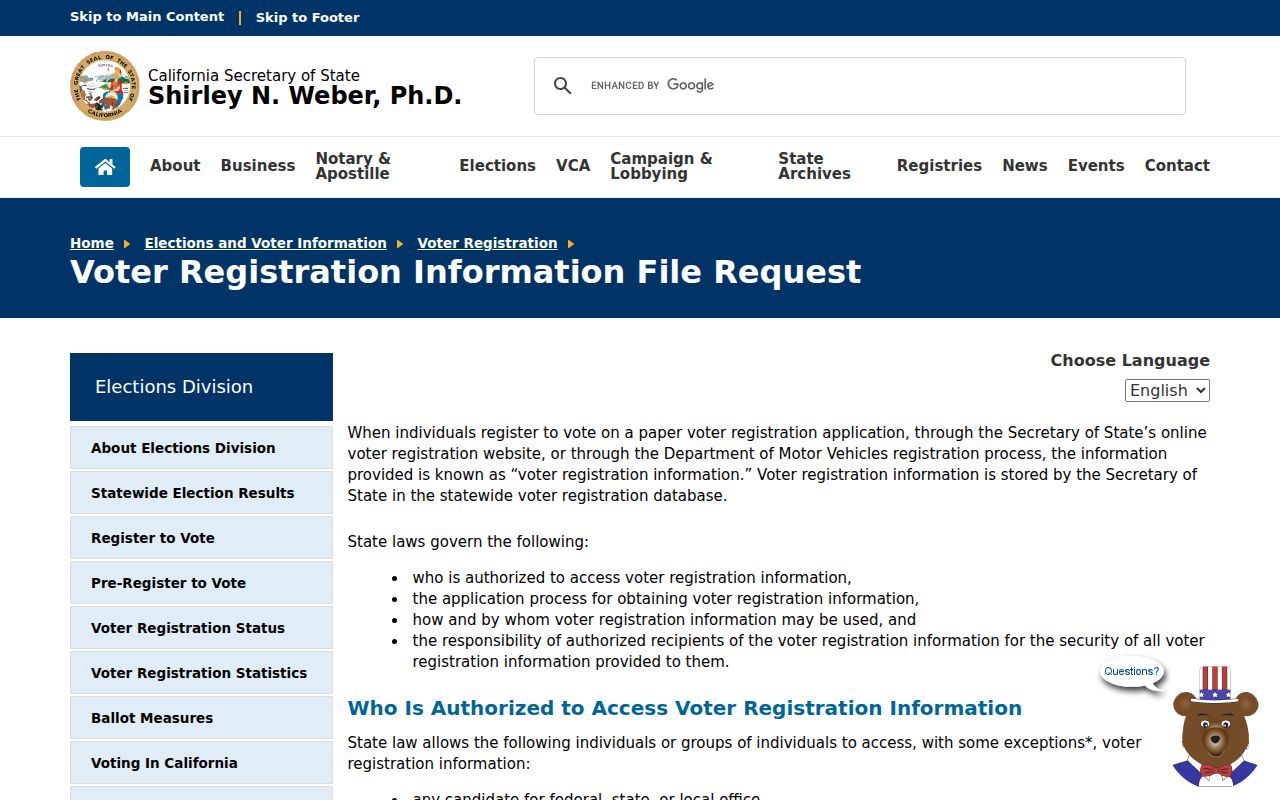
The request screen reinforces the need to state the permitted purpose before asking for a file. It also prevents a ZIP-based search from being mistaken for an open resident index.
Safe at Home Changes Lodi's ZIP Clue
Some people are protected from ordinary address exposure. California's Safe at Home program can provide a substitute mailing address, confidential voter registration, protected name-change processes, and DMV suppression for qualifying survivors. Government agencies and California courts must accept the designated address, and specified real-property documents can use the substitute under Government Code section 6209.5. A ZIP match can therefore point to a program address or no useful public location at all.
Safe at Home does not erase older public records. It also does not turn a mailing ZIP into proof of a person's current residence. The Safe at Home FAQ helps explain why a protected address may differ from a parcel, deed, or old directory entry.
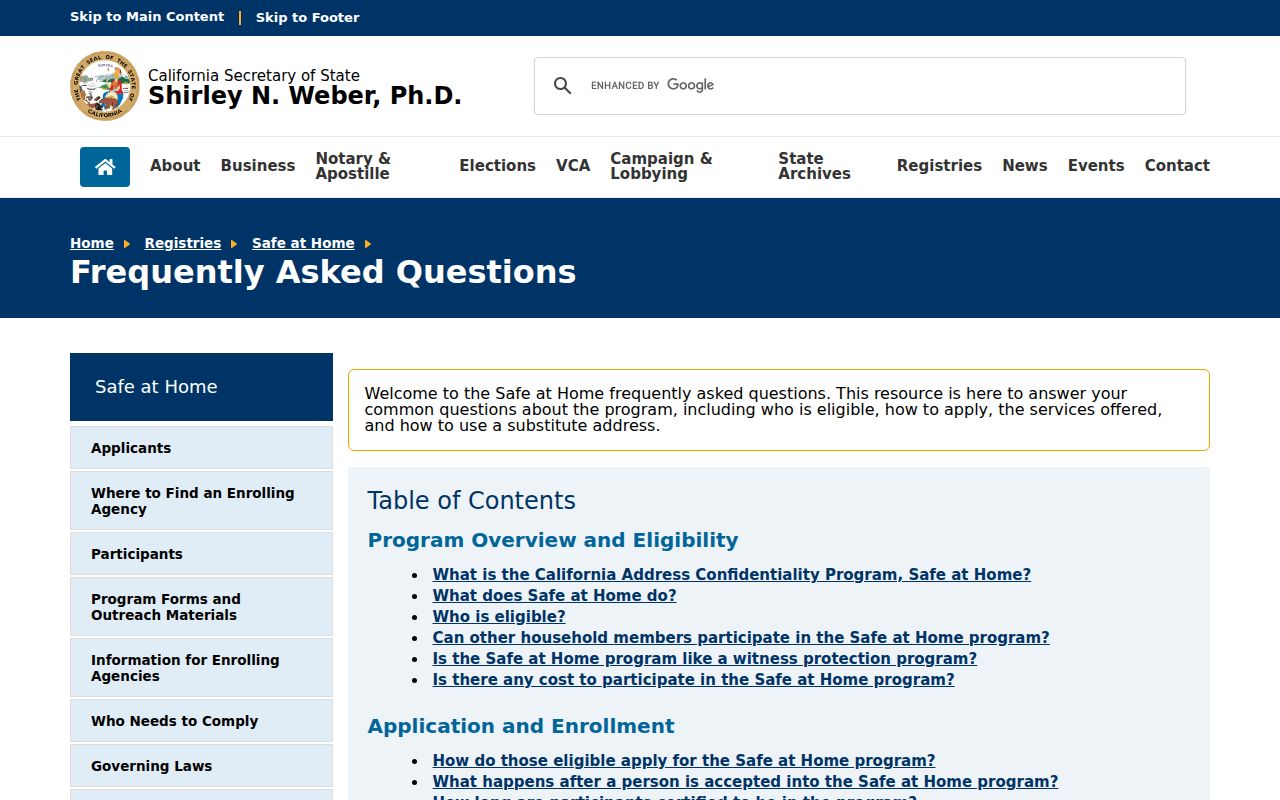
The privacy guidance belongs beside the postal workflow because an absent or substituted address is a protection, not a failed ZIP search.
Lodi ZIP, Situs, Mailing, and APN Terms
Several short labels can look alike in a record but carry different meanings. Define them before comparing a ZIP clue with a parcel or deed. A postal code follows delivery logic. A situs address names the physical property. A mailing address tells an office where to send a notice. An APN is the county assessment key. A legal description in a recorded instrument gives the durable lot, block, subdivision, or metes-and-bounds identity.
- ZIP versus ZIP+4
- A ZIP is the five-digit postal code. ZIP+4 adds four digits for a more specific delivery segment; neither sets a city boundary.
- PO-box ZIP
- A code used for post-office boxes or a mailing range. Lodi's 95241 civic use is a reason not to draw a resident district from it.
- Unique ZIP
- A postal assignment for one organization or facility rather than a broad neighborhood. No unique Lodi ZIP is inferred here.
- Carrier route
- A delivery route grouping used by the postal system. It is not a parcel line, ownership field, or household list.
When a deed, assessor record, or court file conflicts with a ZIP assumption, preserve each field instead of normalizing it. Keep leading zeroes and the exact APN format. Match the legal description and parcel map before connecting a person to a property. That discipline is what turns a Lodi ZIP code directory clue into a traceable records search.
Note: Situs, mailing, legal-description, and ZIP fields may all be correct while pointing to different parts of the same record trail.